

“Always enter the conversation already taking place in the customer’s mind.”
- Robert Collier, The Robert Collier Letter Book
Good stories always begin with someone who wants something.
The hero needs to defeat a villain, save the family farm, win someone’s heart, defuse a bomb, or fight for survival.
This gives the story direction and a purpose. Will the hero get what they want—or not?
There’s a reason for the audience to lean in, to look further, to continue to engage. There’s tension.
The problem for many of our brands in agriculture is that our story begins with us and centers on what we want. We’re the heroes of our story.
“We launched this business in 2012 (or 1956 or 1837), so you should buy our thing.”
“Here’s another little entry in the little story of me. Buy now.”
It doesn’t invite our customers into a story about them; it forces them to sit through ours.
Your customers aren't looking for a company story where they're given a supporting role.
They must be the main character.
Not because your customer is uniquely self-centered, but because each of us experiences life from inside our own story.
We see the world through our own circumstances, problems, ambitions, fears, and desires. The action naturally turns on the future we are trying to create.
Your customer is no different.
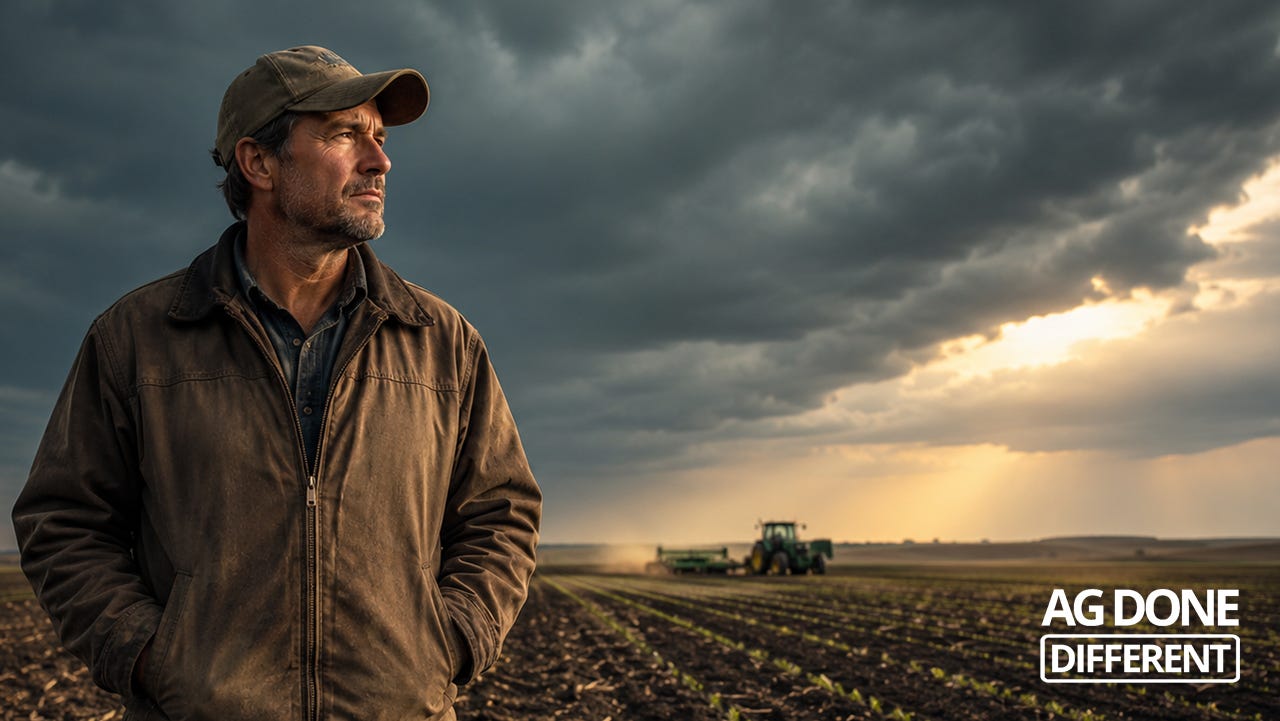
They want to finish planting before the rain.
They want to protect the crop they have spent all season growing.
They want to make a difficult decision with greater confidence.
They want to build a farm worth handing to the next generation.
They want more control over their time, their operation, and their future.
Our job is not to make customers care more about our story. Our job is to understand the story they are already living and show them how we can help them get where they want to go.
That means that when we go to tell our story, the first question in our strategy cannot be:
What can we sell?
OR
How do we get the word out?
It has to be:
What does our customer want?
Not what should they want.
Not what would be convenient for us to sell them.
Not what our technology is capable of doing.
What do they already want badly enough to change what they are doing now?
That is where a good company story begins. Not with your founding date, not with your product. With a customer who wants something.
Make something different. Make people care. Make fans, not followers.