
Before We Can Be Seen
Why the first discipline of great marketing isn't attracting attention—it's giving it.

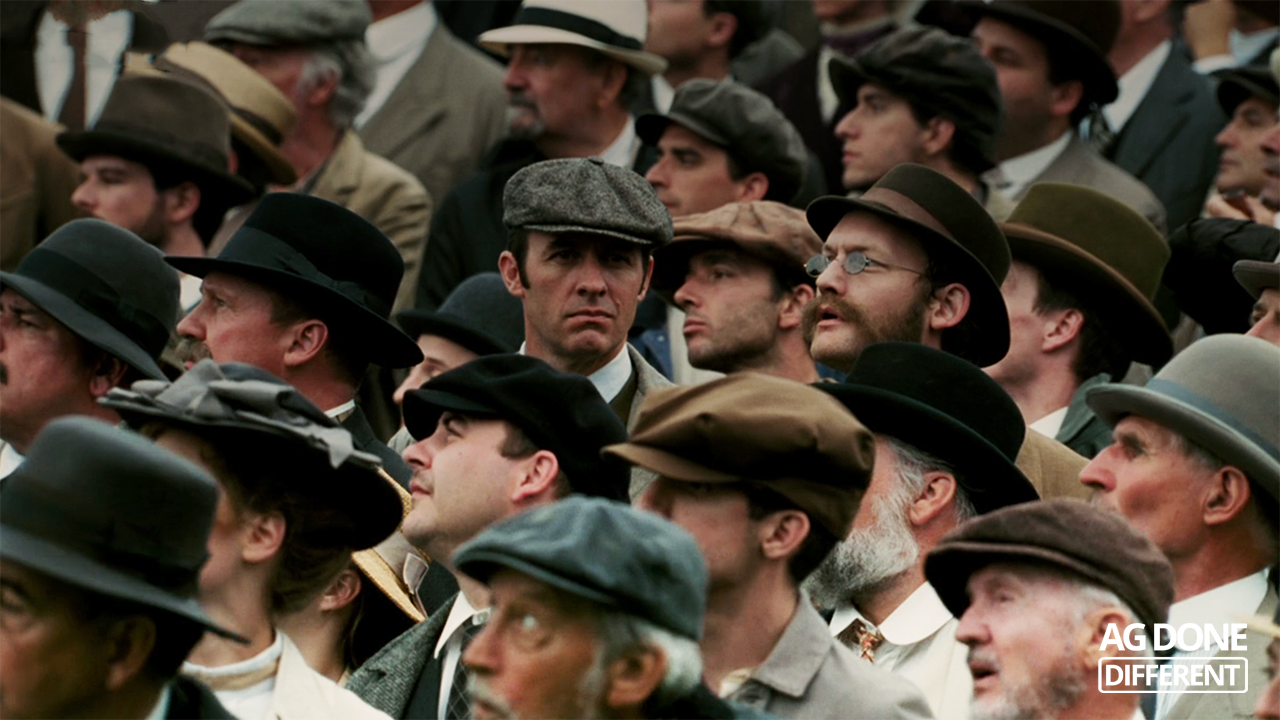
"There is no such thing on earth as an uninteresting subject; the only thing that can exist is an uninterested person." - G.K. Chesterton
Everybody wants to be seen.
Everybody wants someone to care about their work, swipe right on their dating profile, support their cause, buy their product, or believe what they believe.
Everybody wants to be heard.
Everybody wants to be understood. To be proven right. To matter. We all have hopes we’d like others to embrace, mistakes we’d rather they forget, and fears we’d prefer they never discover.
And because we want to be seen so badly, we rush.
We rush to advertise. “Buy our product.” “Book a demo.” “Now available.”
We rush to educate. “Here’s the science.” “Here’s the trial data.” “Let me show you how it works.”
We rush to explain. “The market just doesn’t get it.” “If farmers understood the technology, they’d buy it.”
We spend enormous time, energy, and money trying to attract attention.
But before we can be seen, we must first learn to see.
In 1916, Robert Updegraff published a short business fable called Obvious Adams. It tells the story of the most sought-after executive in American business.
Updegraff’s character isn’t charismatic or especially brilliant. He’s specifically called out as “ordinary” multiple times throughout the book.
His extraordinary ability was in noticing things that everyone else had stopped seeing.
One afternoon, Adams, the book’s main character, was asked to solve a mystery.
His client, a retail chain, had two stores in the same city. One of them was thriving. The other was steadily losing money. The company’s executives had turned themselves inside out debating promotions, advertising campaigns, and sales strategies. Nothing had worked
So they called Adams. He took the train to the city and spent two days doing something remarkably simple.
He watched.
Standing across the street, he noticed that most pedestrians never really saw the struggling store. Their attention was fixed on the traffic signal ahead. They walked past the entrance without realizing it was there.
The sales problem wasn’t due to the advertising or the product. The problem was that people couldn’t see the store.
Adams attended to the problem long enough for the solution to disclose itself.
We tend to think of attention as something we pay.
We spend our childhood being told to pay attention. We spend our adulthood trying to purchase everyone else's.
We buy billboards, television commercials, Google Ads, trade show booths, sponsorships, podcasts, LinkedIn campaigns, and every other imaginable way of persuading someone to look our way for a moment.
But the lesson of Obvious Adams is that attention isn’t something you can purchase; it’s something you need to practice.
Somewhere along the way, we’ve collectively forgotten that the first discipline of attention isn't being noticed—it's noticing.
In his book The Creative Act: A Way of Being, Rick Rubin articulates a related idea about building something important
“The awareness happens first,” he writes. “Analysis is a secondary function.”
In other words, before we can explain the world, we have to experience it. Before we can solve a problem, we have to see it clearly. Before we can persuade another person, we have to understand how they already see the world.
Awareness always precedes insight, and insight must always precede strategy.
Too much of our industry has reversed that order.
We begin with a strategy that we read in a blog, then we build the presentation to compel our audience to see it our way, and then we collect the data that proves our strategy is absolutely perfect.
Only then do we launch the campaign.
Is it any wonder most of the campaigns we produce fail to resonate?
Perhaps the problem isn't that farmers refuse to give us their attention. Perhaps we haven't first given them ours.
So what should we do?
We should slow down, spend more time in the field than in the boardroom, ask more questions than we answer, watch before we write, listen before we launch, and spend less time trying to be interesting and more time becoming interested.
Because that’s where the obvious solutions live.
The poet Malcolm Guite has observed that attention is the beginning of devotion. I suspect it's also the beginning of great marketing.
The companies that change the future of agriculture won't be the ones that demand the market's attention; they'll be the ones that first give it.
Because before we can be seen, we must first learn to see.
Make something different. Make people care. Make fans, not followers.