
Change the Question
The first act of category design isn't finding a better answer. It's asking a better question.

“The greatest obstacle to discovery is not ignorance, it is the illusion of knowledge.”
- Daniel J. Boorstin
In the 1950’s, driving a motorcycle carried a reputation. They were loud, dangerous, rebellious, and a little threatening.
Respectable people did not ride motorcycles.
Then Soichiro Honda asked a different question.
Instead of asking the same question everyone else in the tiny motorcycle category was asking, “How do we build a better motorcycle for motorcycle people?”
He asked, “What would a motorcycle have to become for ordinary people to ride one?”
That question changed the category.
And it led Honda to build the Super Cub. A small, simple, clean, inexpensive, and easy-to-ride motorcycle. It was purposefully not built for the young man who wanted to look dangerous. It was built for the man in the street, his wife, and his kids.
Then Honda talked about it differently.
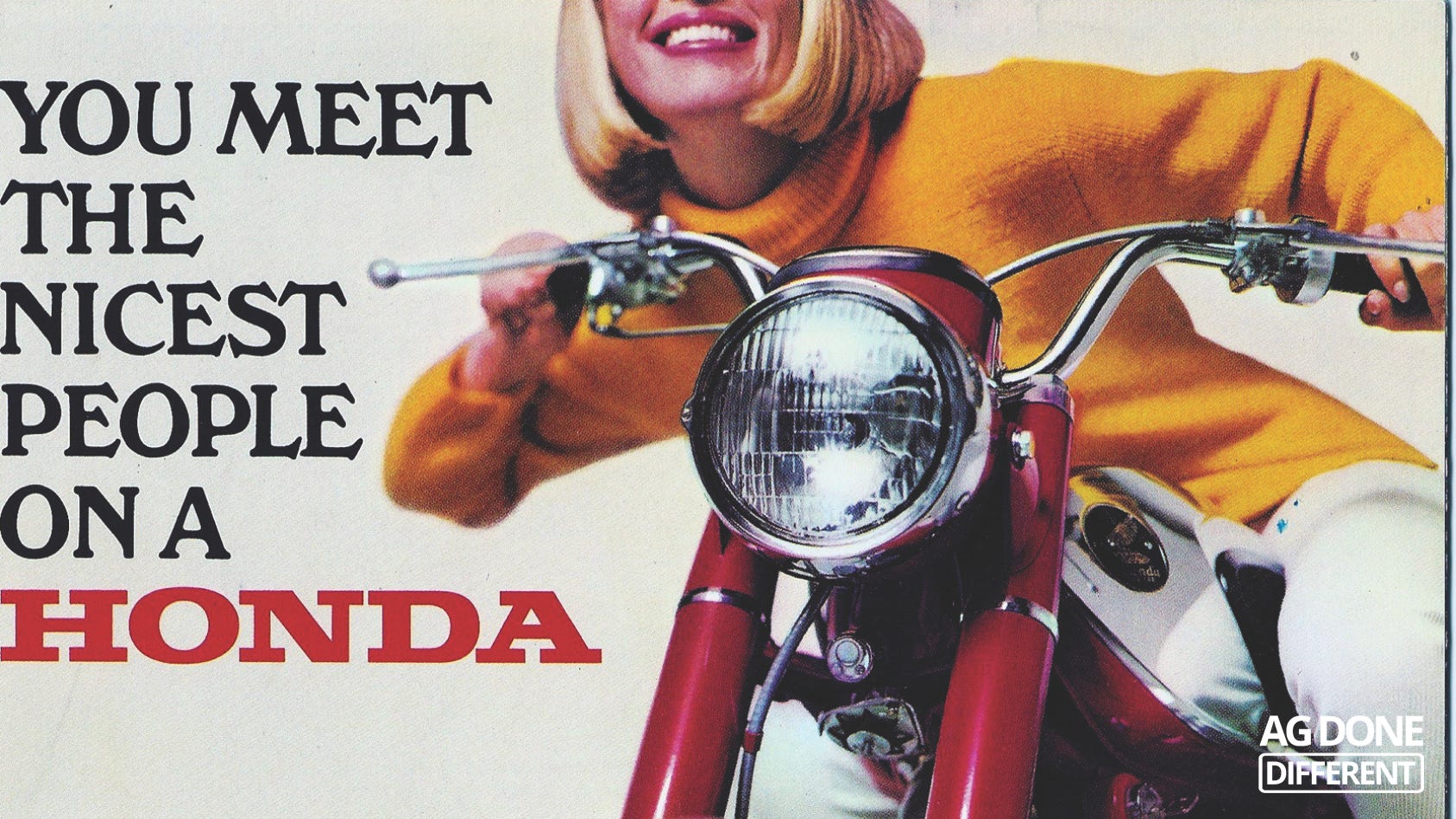
They did not limit the story to motorcycle trade journals read by gearheads. Ads ran in mainstream outlets like Life and Time. The campaign showed celebrities and normal, everyday people riding Hondas through the streets, smiling.
The line they used was brilliant:
“You meet the nicest people on a Honda.”
In one sentence, Honda changed the meaning of the machine. That is what category designers do.
Category designers do not win by finding better answers to the old question.
We change the question.
Manoj Bhargava, the creator of 5-Hour Energy, did not ask, “How do we make a better energy drink to compete with Monster and Red Bull?”
That mindset assumed energy came in a large, refrigerated can.
He asked, “Just because I’m tired, does that mean I’m thirsty?”
That led him to create the energy shot category.
Similarly, Airbnb did not ask, “How do we build a better hotel?”
That question would have trapped them inside the existing lodging category, where the assumptions were room service, front desks, lobbies, on-site dining, loyalty points, and standardized experiences.
Airbnb asked, “What if travelers want to live like locals?”
That helped change the category from hospitality to community-driven hospitality.
This is exactly what Steve Jobs did at Apple. Everyone in the valley at the time was asking, “What can technology do?”
But Jobs asked, “What does it feel like when you use this technology?”
Agriculture needs more of this kind of thinking.
Too many of our companies are still asking existing-category questions.
How do we make a bigger machine that gets more done?
How do we build a better platform?
How do we give agronomists and farmers more data?
How do we sell more seed?
How do we convince farmers to adopt this technology?
Those are not bad questions, but they carry heavy assumptions. And the assumption inside the question determines the category you build.
If you ask, “How do we make a bigger, more efficient machine?” you will probably build a bigger machine.
If you ask, “How do we build a better platform?” you will probably build more features.
If you ask, “How do we give agronomists more data?” you will probably create another dashboard.
If you ask, “How do we sell more seed?” you will probably talk more about plot wins, traits, discounts (price), and yield.
If you ask, “How do we convince farmers to adopt tech?” you will probably treat farmers as the problem.
But category designers do not accept the old question as fixed, they find the assumption inside it and then they rewrite the question. They add a third access to the comparison.
What if productivity doesn’t have to mean bigger equipment?
What if agronomy doesn’t need more data, but earlier clarity for action?
What if seed selling is not about moving more bags, but helping a farmer make a higher-confidence decision?
What if farmers are not slow to adopt, but we are slow to redesign the category around how they actually decide?
It’s not about finding a cleverer answer to the same old questions. The job is to find the assumption buried inside the question and the courage and patience to ask a better one.
Change the question, change the category. Change the category, change the future.
Make something different. Make people care. Make fans, not followers.